
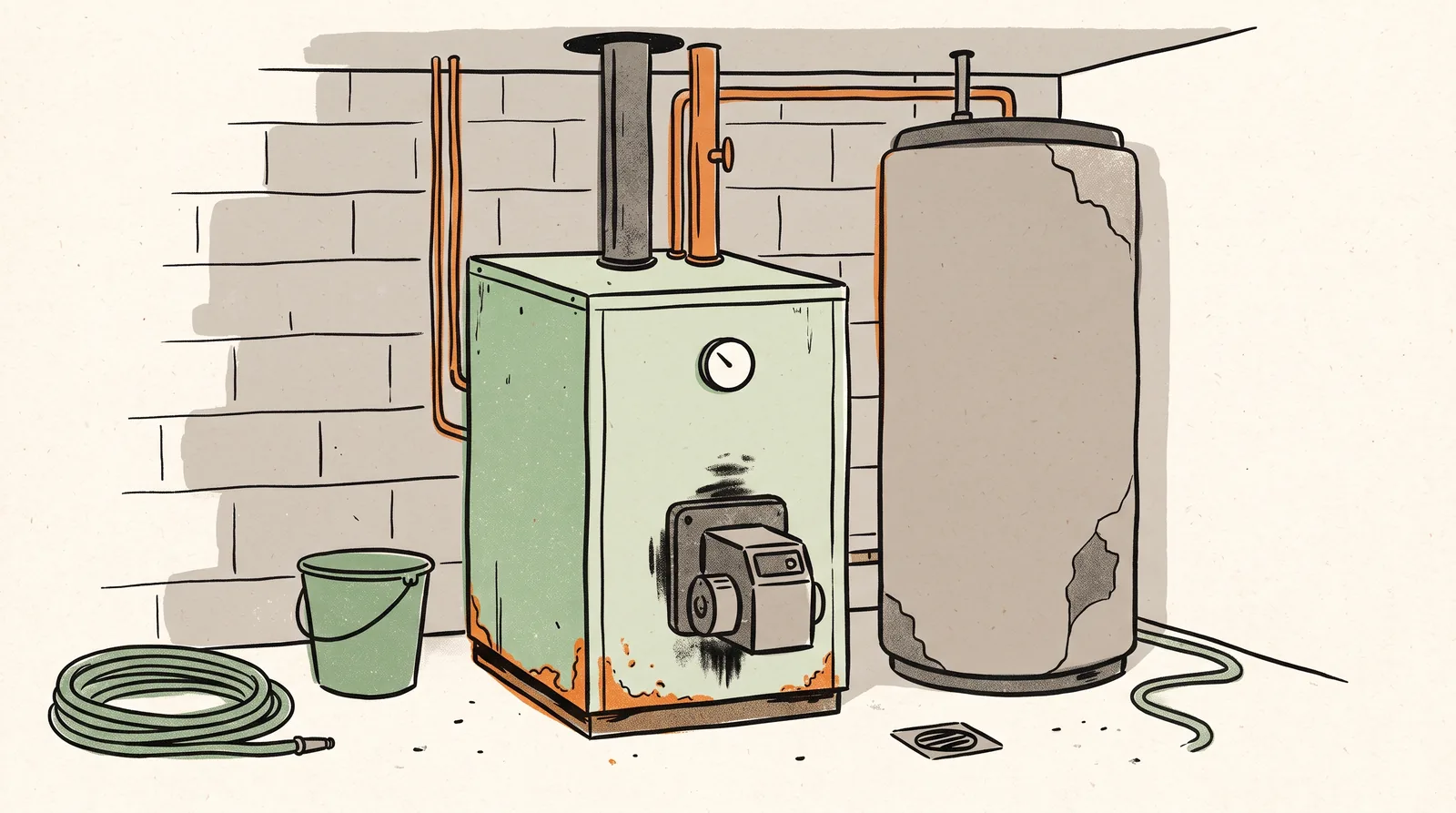
The oil boiler is the most loyal, least loved appliance in a Finnish detached house. It's kept the place warm for 20 years without complaint, and yet every time you fill the tank, it's a reminder that this can't go on forever.
Most oil-heated homes are in a similar spot: worth reviewing your options, but not yet forced to. The boiler works. It's just expensive, and one day it will fail.
Why oil-heated homes are in a strong position
A home on oil heating already has a water-based heating system: radiators or underfloor heating, pipework, a tank.
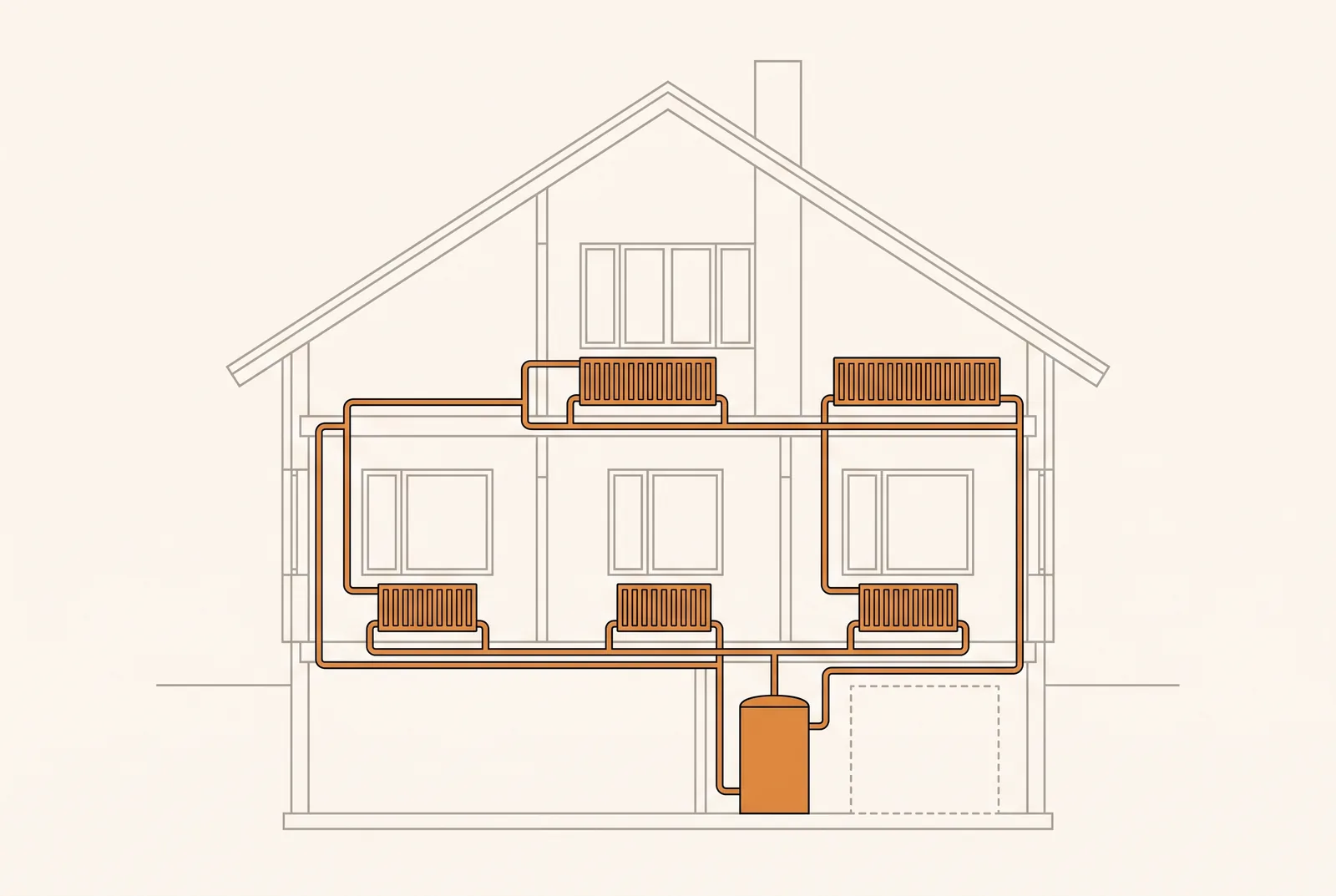
That's a significant saving in money terms. The water circuit is the most expensive and labor-intensive part of a heating retrofit, and it's already done. Replacing an oil boiler means replacing the heat source only — not the whole system.
For comparison: in a home with direct electric heating, switching systems means building an entire water circuit from scratch. That's tens of thousands of euros and a major renovation.
The oil-heated home's position is, in a sense, a paradox. It's the most expensive system to run, but the cheapest one to replace.
Where the cost of oil heating actually comes from
A conversion worth knowing
1 litre of light heating oil ≈ 10 kWh of energy
Boiler efficiency is typically 80–90%, lower in older units
→ usable energy comes to roughly 8–9 kWh per litre
3,000 litres a year ≈ 24,000–27,000 kWh of usable heating energy
On the cost side, the price of oil is the one variable nobody controls. The average price per litre has run around €1.30–1.50 in 2026, with meaningful regional differences. The direction it moves depends on factors that have nothing to do with a Finnish detached house.
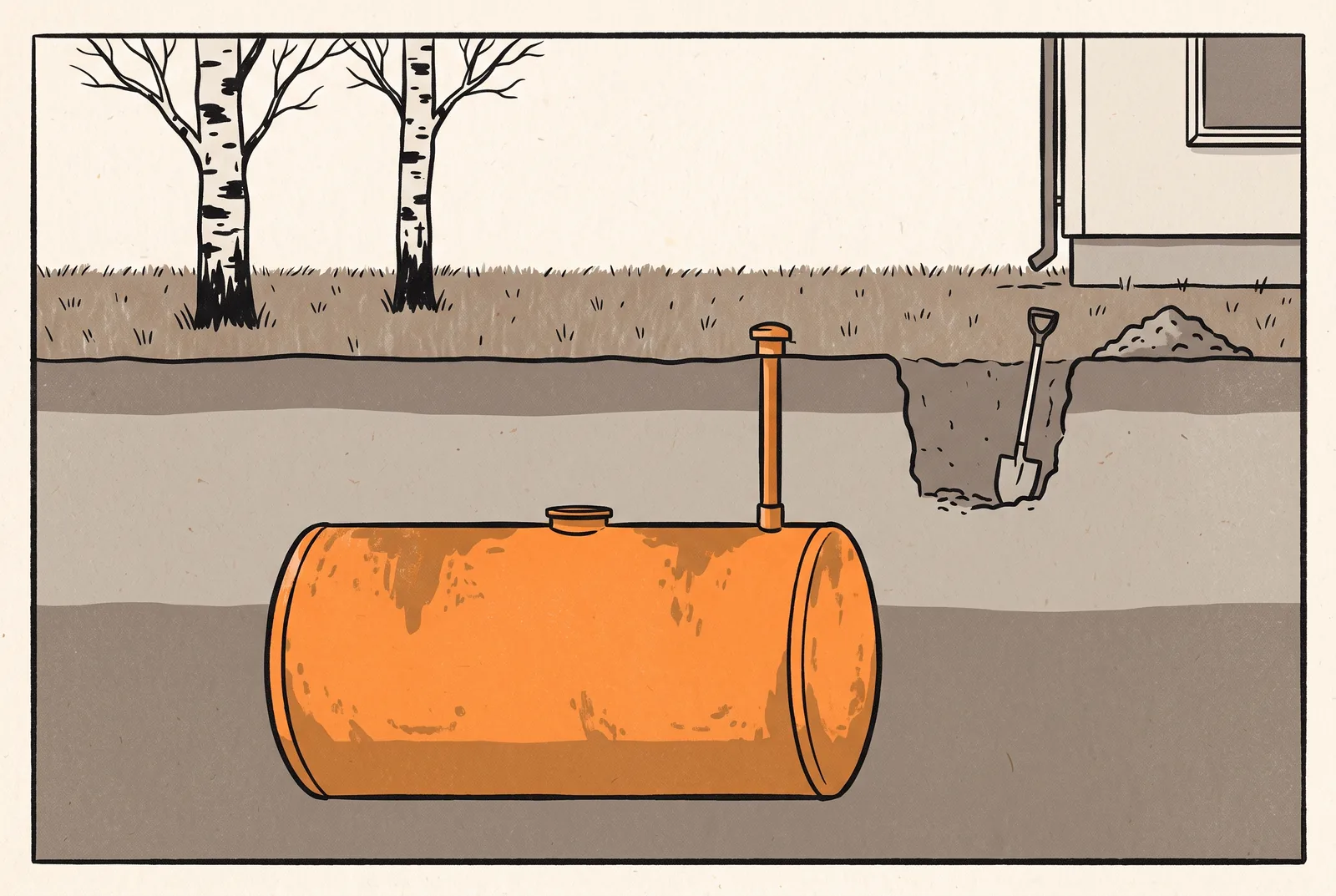
There are also costs that never show up on the fuel bill. A tank inspection typically costs a bit over €300 when competitively sourced. Removing a tank starts at around €450, and an underground tank with excavation work costs considerably more. On top of that come annual boiler servicing and burner cleaning. These are worth factoring in when comparing options.
If you want to break your own heating bill down before comparing, that's covered in where heating costs actually come from.
Option 1: Geothermal in place of oil
Geothermal is the natural choice for many oil-heated homes. The water circuit is already in place, so a ground-source heat pump connects directly into the existing system.
Its strength is predictability. Ground temperature stays between 5–10°C year-round, so efficiency doesn't drop in winter. Whether it's -5°C or -30°C outside, the system doesn't care.
Its weakness is price and the installation itself. Drilling a borehole or laying a ground loop typically costs €5,000–10,000 on top of the equipment, needs space on the property, and often a permit. The project can run for weeks.
Good fit if: you have space on the lot, the budget allows for it, and you want a system you won't have to think about for 20 years.
Option 2: Air-to-water heat pump in place of oil
The more affordable alternative to geothermal, and by far the most common choice in practice. Of the oil-heating retrofits carried out with state grants, around 69% installed an air-to-water heat pump, 19% geothermal, and 7% switched to district heating.
The principle is the same as geothermal, but heat is drawn from outdoor air instead of the ground. No excavation, cheaper investment.
The trade-off is temperature dependence. Around 0°C, a good unit delivers 3–4 kWh of heat per kWh of electricity. At -20°C, that ratio approaches 1:1, and a backup electric element has to kick in.
In practice, this means the system performs well for most of the heating season and worst during exactly the weeks that show up most clearly on the bill.
Good fit if: budget is tighter, there's no room for a borehole, and higher consumption during cold snaps is acceptable.
Option 3: Pellet in place of oil
The oil boiler's close relative. The burner is swapped for a pellet burner, and the rest of the system carries on as before. The investment is small compared to heat pumps.
Its strength is simplicity and familiarity — heating still works the way it always has. Its weakness is labor: pellet heating needs storage space, refilling the silo, and regular boiler cleaning. It's active heating, not something you can forget about.
Good fit if: you want a small upfront cost, have room for storage, and don't mind the ongoing upkeep.
Option 4: Bitcoin Boiler in place of oil
This is the newest option, and it runs on entirely different logic from the other three.
Geothermal, air-to-water heat pumps and pellet all do the same thing: they produce the same heat more cheaply. They're efficiency investments, and heating remains a cost after installing them — only the size of that cost changes.
Bitcoin Boiler routes the electricity used for heating into Bitcoin mining first. The waste heat generated by mining heats the home, and the mining revenue offsets the electricity bill. With current hardware, that revenue runs around €0.10–0.15 per kWh consumed. If the electricity price is below the average mining yield, the sign on your bill can flip. A closer look at the mechanism is in How Bitcoin Heating Works.
In an oil-heated home, installation is straightforward: the unit connects into the existing water circuit, in the same utility room the boiler used to occupy. One mining unit is rated at 5.3 kW, and each boiler holds two units. Larger properties can have several boilers installed in parallel.
The trade-off has to be said plainly: efficiency is 1. Electricity converts to heat at 100%, no more. A heat pump produces the same heat with less electricity. Bitcoin Boiler's advantage isn't in consumption — it's that the consumption also generates revenue, and that revenue moves with the market.
Good fit if: the water circuit is already in place, heating demand is substantial, and turning a cost into a potential source of revenue matters more to you than absolute predictability.
Options side by side
| Geothermal | Air-to-water heat pump | Pellet | Bitcoin Boiler | |
|---|---|---|---|---|
| Investment | €15,000–25,000 | €10,000–15,000 | Significantly less than heat pumps | €18,000–28,000 |
| Requires excavation | Yes | No | No | No |
| Output at -20°C | Full | Drops sharply | Full | Full |
| Requires ongoing effort | No | No | Yes | No |
| Generates income | No | No | No | Yes |
Figures are indicative averages and depend on the property. Bitcoin Boiler's mining revenue is based on the Antminer S21 XP Hyd and September 2026 market conditions.
Can you keep the old oil boiler as backup?
Yes, and sometimes it's the right call.
In a hybrid setup, Bitcoin Boiler is installed alongside the old oil boiler, which stays in reserve for the coldest weeks of winter. Our very first Bitcoin Boiler was installed exactly this way. The decision is always made case by case, based on two things: how much heating capacity the property needs at peak winter demand, and how many mining units the Bitcoin Boiler is fitted with. If peak demand is high, keeping the old boiler as backup can make more sense than oversizing the whole system for a handful of rare cold snaps.
The catch: Finland's enhanced household tax credit requires the oil system to be fully decommissioned. Simply installing a new system alongside the old one doesn't qualify. If the boiler stays in place, you don't get the credit.
Which is worth more — the tax credit, or the certainty and sizing flexibility of a backup system — comes down to the numbers for that specific property. We work through that during the site survey.
Oil heating grants in Finland, 2026
The support landscape changed partway through 2026, and a lot of what's online is now out of date.
The Economic Development Centre's (formerly the ELY Centre) €4,000 grant has ended. The application window closed on 25 May 2026, and no new applications are being accepted. Since 2020, close to 35,000 households received the grant, totaling over €136 million. No decision has been made on a new funding round.
The enhanced tax credit for household expenses (kotitalousvähennys) is still available. When oil heating is replaced with another system, the labor portion of the work qualifies for an enhanced credit: 60% of labor costs, up to €3,500 per person. For a household with two owners, that's up to €7,000. The credit runs through the end of 2027.
Three things worth knowing:
- The credit applies to labor only, not equipment or materials. Ask for the labor cost to be itemized on the invoice.
- The oil heating system must be fully decommissioned. A hybrid installation doesn't qualify for the enhanced credit.
- You can't claim two state grants for the same project.
Whether a specific system qualifies for the enhanced credit is worth confirming with the Finnish Tax Administration or your accountant beforehand. This isn't tax advice, and the rules around this have changed several times in recent years.
How to actually compare your options
Two things worth working out before you request any quotes.
Your real energy demand. Convert recent years' oil purchases into kilowatt-hours using the conversion above. This is the foundation of any comparison, and it's more accurate than any estimate.
How much life is left in the current system. An oil boiler's service life is typically 20–25 years. If it's near that point, the real comparison is between two new systems, not "replace or don't." That changes the math significantly, because the baseline isn't zero — it's the cost of a new oil boiler.
In short
Oil-heated homes are in a strong position when it comes to a heating retrofit, because the most expensive part — the water circuit — already exists. All that's left to replace is the heat source.
Choosing between geothermal, an air-to-water heat pump, pellet, and Bitcoin Boiler doesn't come down to a single number. The first three lower your cost. The fourth changes its structure.
The clearest place to start: dig out the last few years of oil purchases and convert the litres into kilowatt-hours. From there, any quote becomes comparable.
Next: Heating Costs in a Detached House — Where They Actually Come From.